
Walk into any barbershop and you’ll hear it: “Do you want a taper or a fade?” If you’ve ever nodded along without fully knowing the difference, you’re not alone. The debate around taper vs fade is one of the most common (and confusing) topics in men’s grooming.
Both styles are clean, stylish, and versatile—but they’re not the same. In this guide, we’ll break down the taper vs fade haircut difference, explain which one suits you best, and help you walk into your next haircut with confidence.
What Is a Taper vs Fade?
Let’s start simple.
What Is a Taper?
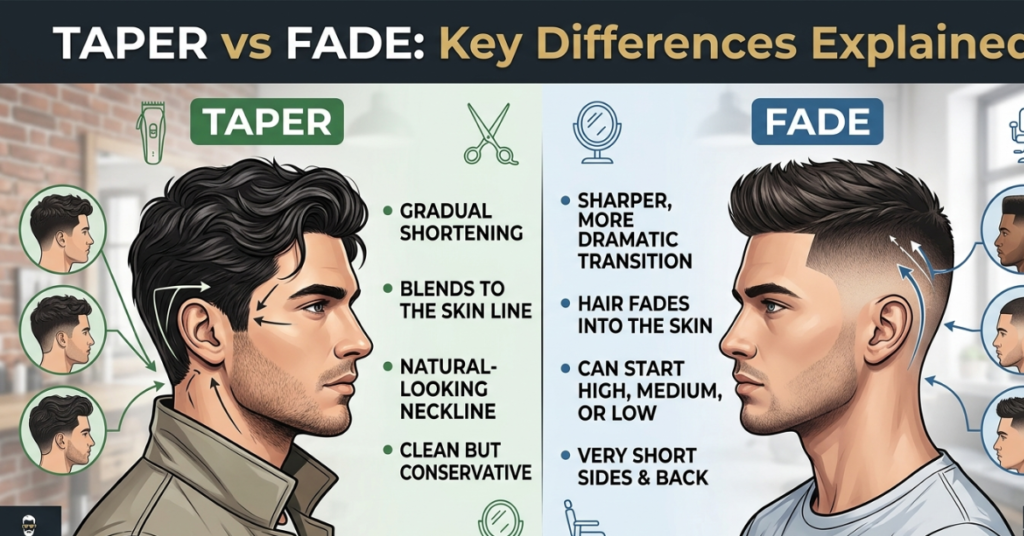
A taper is a gradual change in hair length that typically happens around the neckline and sideburns. The hair slowly shortens as it moves down, creating a natural, subtle look.
Key traits of a taper:
- Smooth, gradual transition
- Leaves more length overall
- Focuses on edges (neckline, sideburns)
- Low-maintenance and classic
What Is a Fade?
A fade is a more dramatic transition where hair blends from longer lengths down to very short—or even skin level.
Key traits of a fade:
- Sharp, noticeable contrast
- Can go down to the skin (skin fade)
- Covers a larger portion of the head
- Edgy and modern appearance
Taper vs Fade Difference (Side-by-Side)
Understanding the haircut taper vs fade debate becomes easier when you compare them directly:
| Feature | Taper | Fade |
| Transition | Gradual and subtle | Sharp and dramatic |
| Coverage | Neckline & sideburns | Entire sides and back |
| Length | Keeps more hair | Can go very short or skin |
| Style | Classic, professional | Bold, trendy |
| Maintenance | Lower | Higher |
In short: a taper blends quietly, while a fade makes a statement.
Low Taper vs Fade: Which Is More Subtle?
If you prefer a cleaner but understated look, this is where the low taper vs fade comparison matters.
- Low Taper:
- Minimal trimming near the neckline
- Keeps most of your natural hair shape
- Ideal for office-friendly styles
- Low Fade:
- Starts just above the ears
- More visible contrast
- Still subtle compared to high fades
Go for a low taper if you want something barely noticeable. Choose a low fade if you want definition without going too bold.
Mid Taper vs Fade: The Balanced Look
The mid taper vs fade sits right in the middle—literally.
- Mid Taper:
- Slightly more defined than a low taper
- Still maintains a natural finish
- Mid Fade:
- Starts around the temple area
- Balanced between subtle and sharp
This is often the safest choice if you’re unsure—it works well for most face shapes and hair types.
High Taper vs Fade: Bold vs Controlled
Looking for something sharper? Let’s compare high taper vs fade.
- High Taper:
- Keeps the taper limited but higher up
- Still relatively conservative
- High Fade:
- Starts near the crown
- Creates a strong contrast
- Very modern and eye-catching
If you want a standout look, a high fade is the way to go.
Skin Taper vs Fade: How Short Is Too Short?
The skin taper vs fade discussion comes down to how close you want to go.
- Skin Taper:
- Rare but possible
- Keeps most hair while slightly exposing skin near edges
- Skin Fade:
- Blends all the way down to bare skin
- Cleanest and sharpest finish
Skin fades require frequent touch-ups but deliver the crispest results.
Taper vs Fade for Different Hair Types
Taper vs Fade Curly Hair
Curly hair benefits from both styles—but in different ways:
- Taper: Keeps curls intact and natural
- Fade: Adds structure and reduces bulk
Taper vs Fade Black Hair
When it comes to taper vs fade black men, both styles are incredibly popular:
- Tapers are great for waves and clean edges
- Fades (especially skin fades) highlight texture and precision
Taper vs Fade Black Hair Styling Tips
- Pair a taper with a lineup for a polished look
- Use a fade to emphasize curls, coils, or waves
Beard Taper vs Fade: What About Facial Hair?
The beard taper vs fade debate is just as important.
- Beard Taper:
- Gradual blend into sideburns
- Natural and soft
- Beard Fade:
- Sharp transition from beard to haircut
- Clean and defined
A beard fade pairs best with a fade haircut for a seamless look.
Mens Taper vs Fade: Which Should You Choose?
Choosing between a mens haircut taper vs fade depends on your lifestyle and style preferences.
Choose a Taper If:
- You want a classic, timeless look
- You prefer low maintenance
- You work in a conservative environment
Choose a Fade If:
- You like bold, modern styles
- You don’t mind frequent trims
- You want a sharper, cleaner finish
Taper vs Fade vs Taper Fade: Wait, There’s Another One?
Yes—this confuses a lot of people.
- Taper: Subtle blending at edges
- Fade: Full transition on sides/back
- Taper Fade: A hybrid where the taper blends into a fade
Think of a taper fade as the best of both worlds.
FAQs
What is a taper vs fade haircut?
A taper is a subtle, gradual shortening of hair near the neckline and sideburns, while a fade creates a more dramatic transition from long hair to very short or skin.
Which is better: taper or fade?
It depends on your style. Tapers are more classic and low-maintenance, while fades are sharper and trendier.
Is a fade shorter than a taper?
Yes, fades usually go much shorter—often down to the skin—while tapers keep more length.
How often should I maintain a fade?
Every 2–3 weeks for a clean look. Tapers can last longer, around 3–5 weeks.
Does a taper last longer than a fade?
Yes. Because it grows out more naturally, a taper requires less frequent maintenance.
Conclusion
The taper vs fade haircut debate really comes down to one thing: personal style. If you want something clean and understated, a taper is your best bet. If you’re after a sharp, modern look, a fade delivers every time.
Both styles have their place—and the best choice depends on your hair type, lifestyle, and how much effort you want to put into maintenance.
Next time you’re in the barber’s chair, you won’t just know the difference—you’ll know exactly what to ask for.