
If you’ve been scrolling through social media lately, you’ve probably seen this bold, unconventional hairstyle turning heads everywhere. But what exactly is it, and why is it suddenly so popular?
This edgy look blends sharp structure with flowing layers, creating a style that feels both futuristic and nostalgic. In this guide, we’ll break down everything you need to know—from popular variations to styling tips—so you can decide if it’s worth trying.
What Is the Jellyfish Haircut?
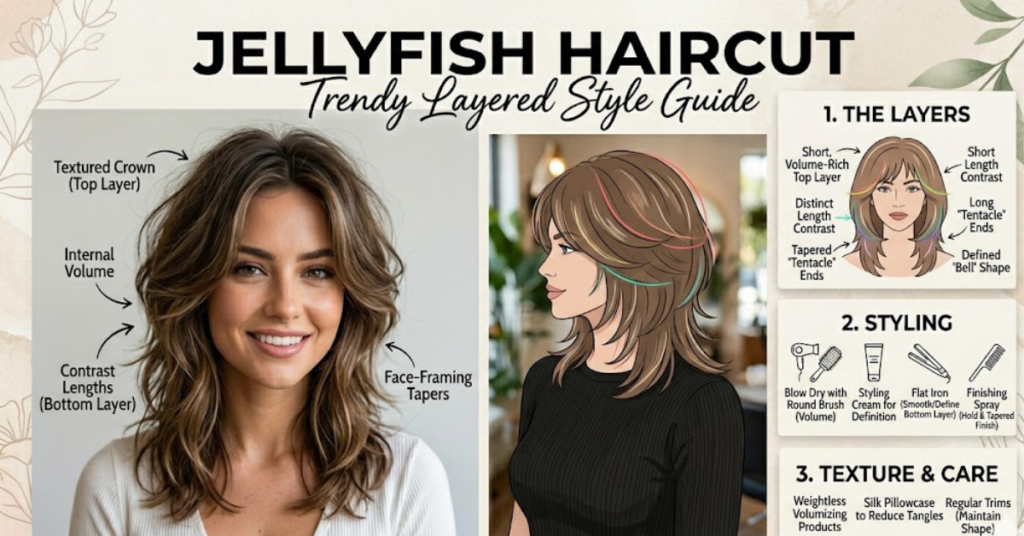
At its core, this style is a two-tiered cut that combines:
- A short, blunt top layer (usually around the chin)
- Long, flowing layers underneath
Think of it as a mix between a bob and long hair—almost like two hairstyles in one. The top section mimics the “cap” of a jellyfish, while the longer layers resemble its trailing tentacles.
It’s often compared to the octopus cut, but this version typically has a more defined separation between layers.
Why Is This Hairstyle Trending?
Its rise isn’t random—it’s driven by a mix of nostalgia and modern experimentation.
Here’s why people love it:
- A unique, standout look
- Works with different hair lengths and textures
- Highly photogenic for social media
- Easy to customize from subtle to dramatic
For many, it’s a way to express individuality without a complete transformation.
Popular Variations
1. Layered Version
This softer take blends the two sections more gradually instead of creating a sharp contrast.
Best for:
- First-timers
- Everyday wear
2. Short Version
Both layers are kept relatively short, creating a compact and edgy shape.
Key features:
- Chin-length top
- Slightly longer bottom
- Easier maintenance
3. Long Version
This option emphasizes contrast, pairing a short top with dramatically long ends.
Why it stands out:
- High-fashion feel
- Strong visual impact
- Works well with straight or slightly wavy hair
4. For Curly Hair
Curls add volume and texture, making the look more dynamic.
Tips:
- Keep layers soft
- Use curl-defining products
- Avoid overly blunt lines
5. For Wavy Hair
Natural movement helps blend the layers more seamlessly.
Benefits:
- Softer transition
- Effortless appearance
- Easier styling
6. For Men and Women
This cut works across styles and identities.
- Men: Often paired with fades or undercuts
- Women: Typically more layered and customizable
7. Soft Version
A toned-down option with less dramatic contrast.
Features:
- Blended layers
- More natural finish
- Lower commitment look
How to Style It
Styling depends on how bold or subtle you want the result.
Tips:
- Blow-dry the top inward for structure
- Straighten or wave the bottom for contrast
- Use texturizing spray for definition
- Try half-up styles to highlight the layers
Who Should Try It?
This isn’t for everyone—but that’s part of the appeal.
Great if you:
- Like bold, fashion-forward styles
- Enjoy experimenting
- Want something different
Maybe avoid if you:
- Prefer low-maintenance hair
- Need a conservative look
- Don’t want frequent trims
Pros and Cons
Pros:
- Eye-catching and unique
- Highly customizable
- Works with various textures
Cons:
- Requires upkeep
- Can be tricky to grow out
- Not universally flattering
FAQs
What is this haircut exactly?
A two-layer style with a short top section and longer bottom layers.
Is it hard to maintain?
It needs regular trims, but daily styling is manageable.
Can it work with short hair?
Yes, though the contrast will be less dramatic.
Does it suit curly hair?
Absolutely—it can look voluminous and textured.
Is it suitable for men?
Yes, especially when combined with modern fades or undercuts.
Conclusion
This hairstyle is more than just a trend—it’s a statement. Whether you go bold or keep it soft, it offers plenty of room for self-expression.
If you’re thinking about trying it, a skilled stylist can help tailor the layers to suit your hair type and face shape.