
That’s exactly the power of a fringe—also known as bangs. Whether you’re going for something edgy, soft, or effortlessly cool, this style can redefine your entire appearance.
In this guide, we’ll break down everything you need to know—from popular styles like textured and messy fringes to styling tips and face shape advice. If you’ve been wondering whether this look suits you, you’re in the right place.
What Is a Fringe?
A fringe refers to the front section of hair cut to fall over the forehead. It can be short, long, straight, or layered depending on your preference.
This versatile style works across all genders and age groups, adapting easily to different personalities and hair types.
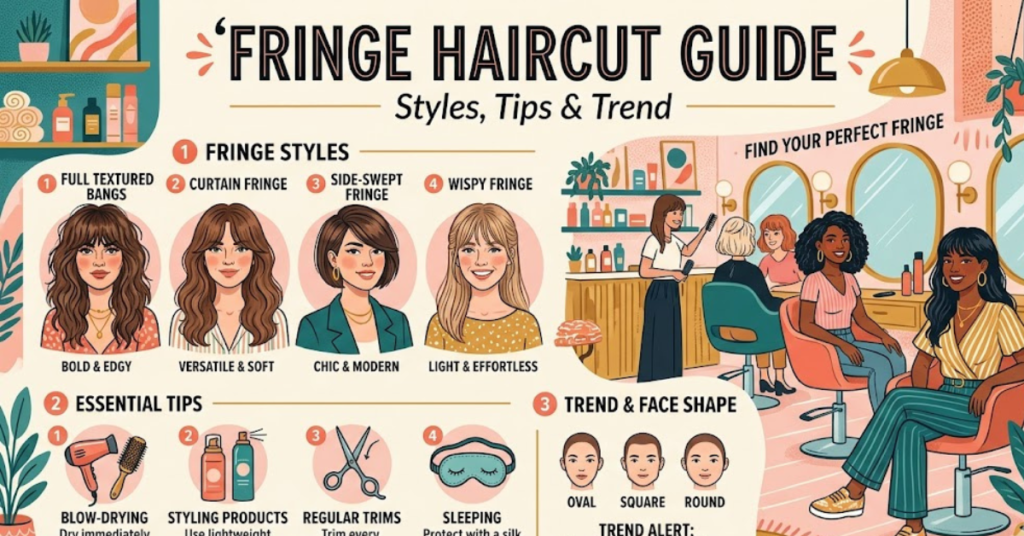
Popular Fringe Styles
1. Textured Fringe
This style focuses on layers and movement rather than a blunt cut.
Why it works:
- Adds volume to thin hair
- Reduces bulk in thick hair
- Easy to style daily
It’s especially popular among men for its relaxed, modern feel.
2. Messy Fringe
Perfect for a carefree, stylish look, this version is slightly unstructured and often paired with fades or tapers.
Key features:
- Tousled, natural appearance
- Works well with medium-length hair
- Minimal styling required
3. Short Fringe
A shorter version offers a clean, sharp finish, sitting higher on the forehead.
Best for:
- Low-maintenance routines
- Hot climates
- Professional settings
4. Low Taper with Fringe
This combines a subtle fade on the sides with more length on top.
Why people like it:
- Clean yet stylish
- Suitable for both casual and formal looks
- Enhances facial features
5. Messy Textured Combination
This blends layering with a slightly undone finish—ideal for a youthful, modern vibe.
Men vs Women: Key Differences
For Men
Styles tend to feature sharper fades and structured tops, such as:
- Textured tops with fades
- Messy styles
- Short cropped fronts
For Women
Looks are generally softer and more face-framing, including:
- Curtain bangs
- Wispy layers
- Side-swept styles
How to Choose the Right Style
1. Face Shape
- Round: Longer, layered styles
- Square: Soft, textured edges
- Oval: Most styles work well
2. Hair Type
- Thick hair: Go for layering to reduce heaviness
- Thin hair: Choose light, airy layers
- Curly hair: Keep more length for control
3. Lifestyle
If you prefer something low-maintenance, opt for a more natural, slightly messy look.
Styling Tips
- Use a lightweight cream for natural movement
- Blow-dry forward for added volume
- Avoid heavy gels—they make hair stiff
- Trim regularly to keep the shape fresh
Who Should Try It?
This style works for almost anyone, but it’s especially helpful if you:
- Want to balance a larger forehead
- Like modern, trendy looks
- Prefer flexible styling options
It’s also a great choice for younger age groups due to its easy upkeep.
FAQs
1. What does this style involve?
It means cutting the front section of hair to fall over the forehead.
2. Is it easy to maintain?
Yes—regular trims and light styling are usually enough.
3. Which option suits men best?
Textured, messy, and tapered variations are currently the most popular.
4. Does it work for all face shapes?
Yes, with slight adjustments in length and layering.
5. Is it suitable for kids or teens?
Absolutely—it’s stylish, simple, and easy to manage.
Conclusion
This isn’t just a passing trend—it’s a timeless style that continues to evolve. Whether you prefer something sleek and polished or relaxed and textured, there’s an option for everyone.
The key is choosing a version that matches your face shape, hair type, and daily routine. Once you find the right fit, even a small change in the front can make a big difference.