
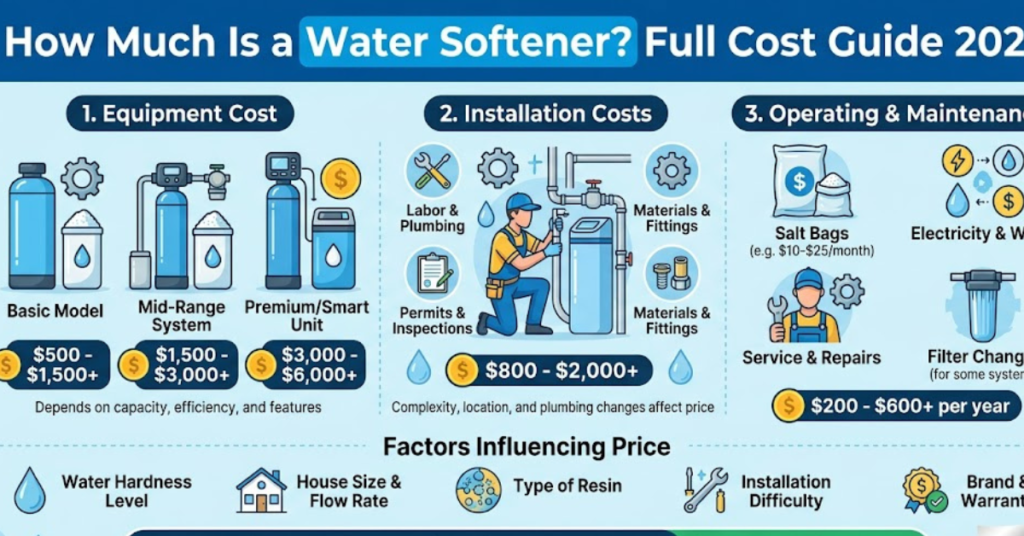

If you’ve ever dealt with dry skin, cloudy dishes, or stubborn limescale on faucets, you’ve probably considered installing a water softener. One of the first questions homeowners ask is: what does a water softener cost?
The answer varies depending on your home size, water hardness, system type, and installation needs. This guide breaks it all down so you can make a confident decision.
What Is a Water Softener and Why Is It Important?
A water softener removes excess minerals like calcium and magnesium from your water supply. These minerals are responsible for “hard water” problems.
Common issues caused by hard water include:
- Scale buildup in pipes and appliances
- Dry skin and brittle hair
- Soap that doesn’t lather properly
- Increased energy bills from inefficient appliances
Installing a softening system helps improve water quality and protects your home in the long run.
Average Cost of a Water Softener System
The price of a system depends largely on its type and capacity. Here’s a general breakdown:
- Basic systems: $400 – $1,000
- Mid-range systems: $1,000 – $2,500
- High-end systems: $2,500 – $6,000+
Most homeowners spend between $1,000 and $3,000 for a reliable setup.
Installation Costs Explained
Installation can significantly impact your total investment.
- Standard installation: $200 – $1,000
- Complex setups: $1,000+
When combined, the total cost (system + installation) typically falls between:
$700 and $4,000+
Factors like plumbing condition and accessibility play a big role here.
Installation-Only Pricing
If you already have a unit and just need installation, expect:
- Basic installation: $150 – $500
- Higher costs if plumbing modifications are required
This usually includes setup, valve connections, and system testing.
Cost by Home Size
Your household size affects the system capacity you’ll need:
- Small homes: $700 – $1,800
- Medium homes: $1,200 – $3,000
- Large homes: $2,500 – $5,000+
Whole-house systems cost more upfront but provide better long-term value.
What Affects the Price?
Several factors influence the final cost:
1. System Type
- Salt-based (most effective)
- Salt-free (low maintenance, eco-friendly)
2. Water Hardness
Harder water requires more powerful systems.
3. Household Size
More people = higher water usage = larger unit needed.
4. Installation Complexity
Older homes may need plumbing upgrades.
5. Brand & Features
Smart controls and warranties increase cost.
Special Cases
Well Water Systems
Homes using well water often need extra filtration:
- Typical cost: $1,200 – $4,000+
- May include iron or sediment filters
High Hardness Areas
Extremely hard water may require larger or advanced systems, increasing overall cost.
Cost of Individual Components
If you’re replacing parts instead of the full system:
- Small tank: $200 – $500
- Standard tank: $500 – $1,200
- High-capacity tank: $1,200 – $2,000
DIY Kits vs Professional Systems
DIY Kits
- $300 – $2,000
- Lower upfront cost
- Risk of installation errors
Professional Installation
- Higher cost
- More reliable long-term performance
Branded Systems and Rentals
Premium Brands
Well-known brands often cost more due to service packages:
- Typical range: $1,000 – $5,000+
- Often include maintenance plans
Rental Options
- $20 – $50/month
- Lower upfront cost
- Can be more expensive over time
Is It Worth the Investment?
For most homeowners, yes.
Benefits include:
- Longer appliance lifespan
- Better skin and hair health
- Cleaner dishes and laundry
- Reduced plumbing repairs
- Lower energy usage
Over time, these savings often offset the initial cost.
FAQs
1. What is the average cost of a water softener?
Most systems range from $1,000 to $3,000 including installation.
2. How much does installation add?
Typically $200 to $1,000 depending on complexity.
3. Is DIY installation cheaper?
Yes, but mistakes can lead to costly repairs.
4. How long do systems last?
Around 10–15 years with proper maintenance.
5. What’s the most affordable option?
Basic DIY kits or rental plans.
Conclusion
The cost of a water softener depends on your home, water quality, and installation needs. For most households, a realistic budget falls between $1,000 and $3,000.
Instead of focusing only on price, consider long-term benefits like improved water quality, reduced maintenance, and extended appliance life. The right system can be a smart investment for both comfort and protection.