
If you’ve ever wondered how do you say hi in Spanish, you’re not alone. It’s one of the first phrases people learn when starting Spanish—and for good reason. Greetings set the tone for every conversation, whether you’re traveling, meeting new people, or practicing the language.
In this guide, you’ll learn not just the basic way to say “hi,” but also how to sound natural in different situations—from formal settings to casual slang. Let’s make sure you never feel stuck saying hello again.
The Basic Way: How Do You Say Hi in Spanish?
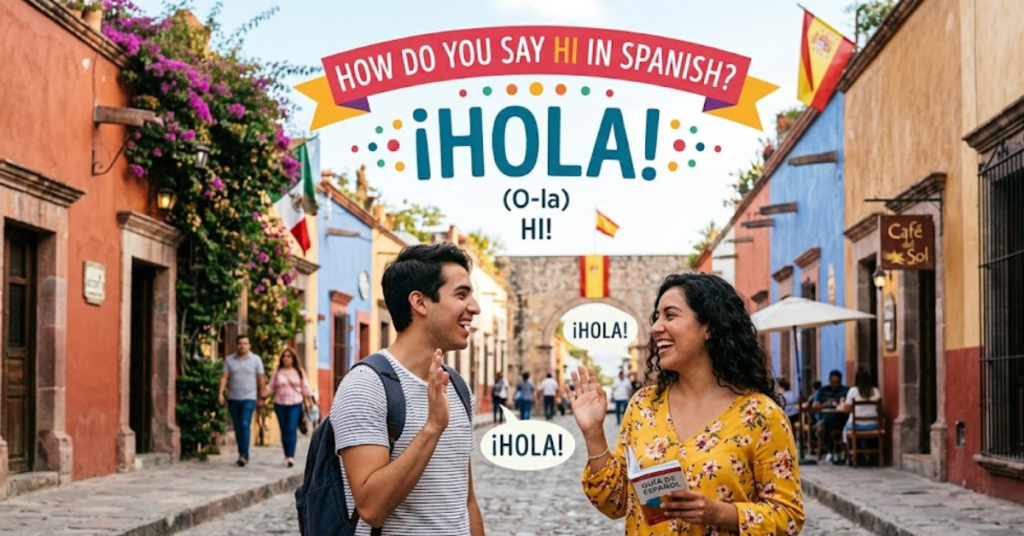
The simplest and most common answer to how do you say hi in Spanish language is:
- Hola — This is the universal Spanish greeting.
It’s easy to pronounce (OH-lah) and works in almost every situation. Whether you’re greeting a friend, a stranger, or even a group, hola is always a safe choice.
Formal vs Informal Greetings
Spanish greetings can change depending on who you’re talking to. Understanding this makes your speech sound more natural.
Informal Greetings
When speaking with friends, family, or people your age:
- Hola — Hi
- Hola, ¿qué tal? — Hi, how’s it going?
- Hola, ¿cómo estás? — Hi, how are you?
These are perfect examples of how do you say hi in Spanish informal contexts.
Formal Greetings
When speaking to elders, professionals, or in polite situations:
- Hola, ¿cómo está usted? — Hello, how are you? (formal)
- Buenos días — Good morning
- Buenas tardes — Good afternoon
- Buenas noches — Good evening/night
Spanish Slang: Casual Ways to Say Hi
If you’re curious about how do you say hi in Spanish slang, here are some popular options used in everyday conversations:
- ¿Qué pasa? — What’s up?
- ¿Qué onda? — What’s going on? (common in Latin America)
- ¿Qué tal? — How’s it going?
- Ey / Hey — Borrowed from English, used casually
These phrases help you sound more like a native speaker, especially in relaxed settings.
How to Say Hi to a Guy or a Girl in Spanish
A common question is how do you say hi in Spanish to a guy or to a girl. The good news? The greeting itself usually doesn’t change.
- Hola works for both males and females.
However, you can personalize it:
- Hola, amigo — Hi, friend (to a guy)
- Hola, amiga — Hi, friend (to a girl)
This adds warmth and makes your greeting more engaging.
Common Variations You’ll Hear
When you ask “google how do you say hi in Spanish” or even “hey google how do you say hi in Spanish,” you’ll often see these variations:
- Hola — Standard “hi”
- Buenas — Shortened version of buenos días/tardes/noches
- Hola hola — A playful or enthusiastic hello
These are widely understood and used across Spanish-speaking regions.
Pronunciation Tips
Getting the pronunciation right makes a big difference:
- Hola → OH-lah (the “h” is silent)
- Speak clearly but don’t overemphasize syllables
- Keep your tone friendly and relaxed
When Should You Use Each Greeting?
Here’s a quick guide:
- Use “hola” → Anytime, anywhere
- Use slang → With friends or peers
- Use formal greetings → Work, elders, or first meetings
Choosing the right tone shows cultural awareness and respect.
FAQs
1. What is the simplest answer to how do you say hi in Spanish?
The simplest answer is hola. It works in almost every situation.
2. How do you say hi in Spanish slang?
You can say ¿qué pasa?, ¿qué onda?, or hey for a more casual tone.
3. How do you say hi in Spanish to a girl or guy?
Use hola for both. You can add amigo or amiga to personalize it.
4. Is “hola” formal or informal?
It’s neutral. You can use it in both formal and informal situations.
5. Are there different greetings in different countries?
Yes, slang varies by region, but hola is universally understood.
Conclusion
Now you have a clear answer to how do you say hi in Spanish, along with variations that help you sound natural and confident. From the simple hola to more expressive slang, you’ve got everything you need to start conversations the right way.
The next step? Try using these greetings in real life—whether it’s with friends, language partners, or while traveling. The more you practice, the more natural it will feel.